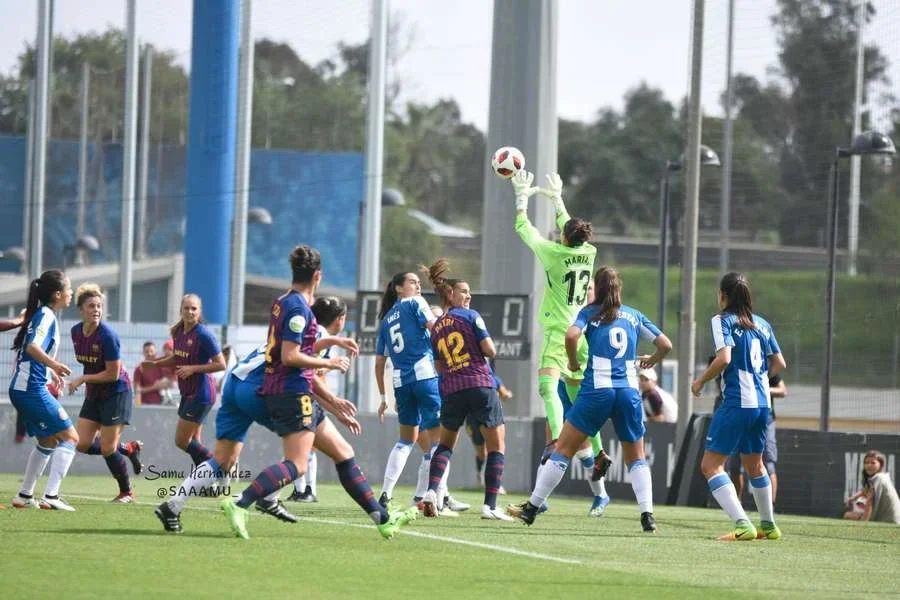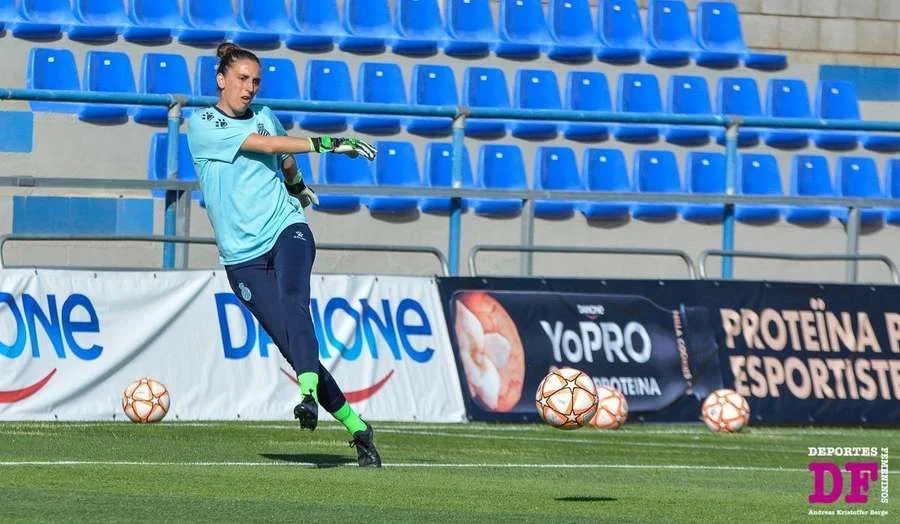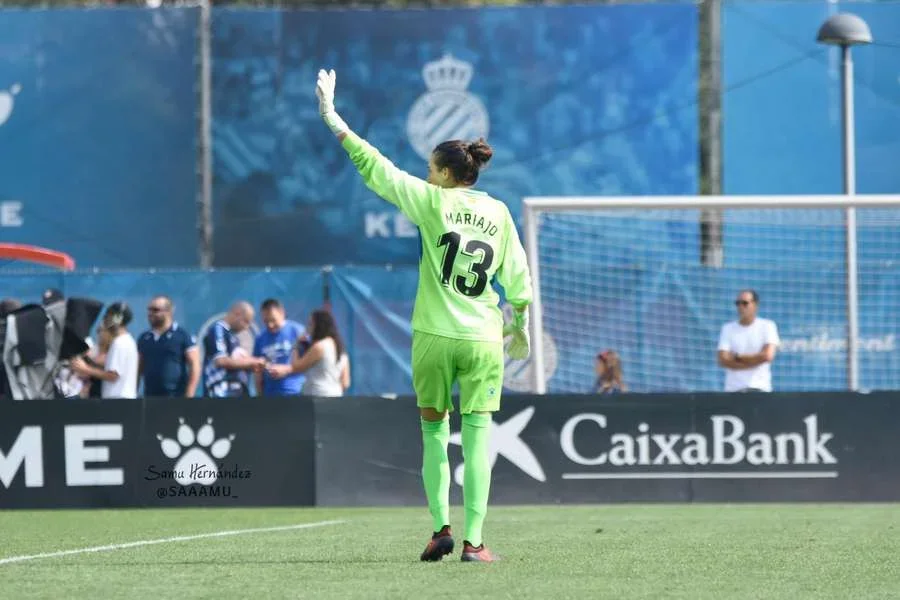

Mariajo Pons playing for Espanyol
Courtesy of Mariajo Pons’ personal collection
María José Pons, one of Spain’s top goalkeepers of the past decades, was known for her reflexes, agility, and aerial ability. She played for Barcelona, Espanyol, Valencia, Levante, and Sabadell, earning caps for the national team and becoming a role model for current Spanish goalkeepers. In a conversation with Flashscore Spain’s Country Manager, Óliver Domínguez, she discussed her career and the state of Spanish women’s football.
**Q: How has women’s football changed since you played?**
**A:** Dramatically. There’s been a radical shift, especially in investment, visibility, and growth. But honestly, I think progress in marketing, television, and salaries hasn’t been as fast outside Madrid and Barcelona, where the leap has been massive. We don’t yet have a broad enough base to produce high-quality competition. That’s why I often say we need a league with fewer teams and more concentrated quality. We still have a long way to go to have 10 or 12 truly competitive sides, especially in terms of investment. Still, things have changed enormously. For example, watching the Champions League match at the Camp Nou the other day gave me goosebumps. Thinking back to when I played in front of 1,000 or 2,000 people at a stadium, and now seeing 60,000 paying spectators—they’re no longer just family; they pay for tickets. A lot remains to be done, but the change is huge.
It’s true that the situation and life at Barcelona compared to other clubs are like two parallel realities. Sometimes you go to a stadium like Granadilla’s Heliodoro and only a section fills up, but it’s not the same as when they face Barça. For me, the cornerstone of this growth is Barcelona, and all the other clubs still have a lot of ground to cover.
**Q: Do you feel a healthy envy of the current situation compared to when you played?**
**A:** Yes, definitely. Alexia used to be with me at Espanyol, she’d sleep in the same room, she was a kid. Now she’s a historic, iconic figure, the face of major brands—it’s incredible to see how far she’s come. Same with Aitana. We’re producing Ballon d’Or winners, players endorsed by Nike and Adidas, which was unthinkable before. Back then, you had to beg for a pair of boots. That kind of progress is enviable in a good way. But it’s also true that outside Barcelona and even Madrid, the growth hasn’t been as big as we’d hope. In the end, a match at Espanyol probably doesn’t have much more visibility or much higher salaries than when I first played there. But if you look at Barça, yes. It’s like I said—we live in two very different realities.
**Q: What was Barcelona like when you played there two decades ago?**
**A:** Well, we launched the first top division for Barça, because previously there were regional groups—northern, Catalan, etc. When they decided to create the Women’s Super League (as it was called then), clubs could choose whether to sign up. Athletic Bilbao didn’t exist; they were called Leioa and didn’t join. Barcelona didn’t join at first either. So they weren’t among the pioneers of Liga F. I think it was a year or two later—they had to play a regular league, we won it, then a promotion playoff, and we won that to reach the top division. But Barça…